
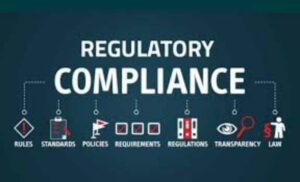
Regulatory Compliance could be Statutory and Non-Statutory.
Regulatory compliance can be either statutory or non‑statutory: statutory compliance stems from laws enacted by government bodies, while non‑statutory (often called regulatory, policy, or voluntary) compliance comes from rules, standards, regulators, industry bodies, or internal policies that interpret, implement, or extend those laws. Both types are essential for legal standing, risk management, reputation, and operational continuity.
Overview of regulatory compliance
- Definition: Regulatory compliance means following rules, standards, and requirements that apply to an organization’s activities. These requirements may originate in statutes (laws), regulations issued by agencies, industry standards, contractual obligations, or internal governance policies.
Contact us below 👇
- Purpose: Compliance protects stakeholders (customers, employees, investors, the public), reduces legal and financial risk, preserves licences and market access, and supports ethical and sustainable operations.
- Scope: Compliance covers many domains—tax, labor, environmental, financial reporting, data protection/privacy, health & safety, product standards, anti‑money laundering, consumer protection, and more.
Statutory compliance — what it is and why it matters
- Source and nature: Statutory requirements are created by legislatures (parliament, congress, assemblies) and become law; they are the highest-level legal obligations an organization faces. Examples include tax laws, corporate law, labor statutes, and sector‑specific Acts.
- Characteristics: Statutory duties are mandatory for applicable entities, generally non‑negotiable, and violations commonly attract fines, penalties, prosecution, or imprisonment depending on jurisdiction and severity.
- Organizational impact: Companies must identify which statutes apply (based on jurisdiction, business model, industry, and structure), embed those duties into processes (payroll, reporting, registrations, licensing), and maintain records that demonstrate compliance.
Non‑statutory compliance — regulatory, contractual, and voluntary rules
- Regulatory vs. statutory: Regulators (agencies or commissions) are often empowered by statutes to issue detailed rules, guidance, and licensing conditions; these regulatory requirements are binding for entities in the regulator’s remit and typically change more frequently than statutes.
- Contractual obligations: Agreements with customers, suppliers, or partners can create legally binding compliance duties (e.g., SLAs, data processing clauses, supplier codes of conduct) that are enforceable through contract law rather than statutory penalty frameworks.
- Voluntary and industry standards: Standards (ISO, PCI‑DSS, industry codes, ESG frameworks) may be voluntary but become effectively mandatory when customers, regulators, or insurers demand them; non‑adoption can thus cause commercial loss or loss of certification.
- Internal policies: Company governance documents—codes of conduct, anti‑fraud controls, data classification policies—are non‑statutory but critical for operational control and for showing regulators and auditors that the organization takes compliance seriously.
Key differences summarized
- Source: Statutes = legislature; regulatory = agencies or industry bodies; contractual/voluntary = contracts or standards.
- Detail and flexibility: Statutes tend to be broader and change slowly; regulatory rules are more prescriptive and can be updated faster; contractual/voluntary rules vary in specificity and enforceability.
- Consequences of breach: Statutory breach → legal penalties and potential criminal liability; regulatory breach → fines, enforcement action, licence suspension; contractual breach → damages, termination; voluntary standard breach → reputational or commercial impact.
How organizations manage statutory and non‑statutory compliance?
- Compliance framework: Implement a governance framework that maps applicable laws, regulations, contracts, and standards to business processes, assigns ownership, and defines controls and KPIs.
- Risk‑based approach: Prioritise controls based on legal exposure, likelihood and impact, and stakeholder importance (customers, regulators, board). Use risk registers and periodic assessments to allocate resources efficiently.
- Policies and procedures: Translate requirements into clear policies, standard operating procedures, checklists, and workflows that operational teams can follow and auditors can test.
- Monitoring and reporting: Use monitoring (automated where possible), internal audits, compliance dashboards, and regular reporting to senior management and the board to surface issues early.
- Training and culture: Provide role‑specific training and foster a culture of compliance where staff understand obligations and feel empowered to raise concerns (whistleblowing channels, speak‑up policies).
- Third‑party and supply‑chain oversight: Extend compliance checks to vendors and partners through due diligence, contractual clauses, and periodic audits; many breaches originate from third parties.
- Recordkeeping and evidence: Maintain auditable evidence (logs, certificates, filings, approvals) to demonstrate ongoing compliance during inspections or disputes.
Practical checklist for getting started (example)
- Identify jurisdictions and statutes that apply to your business (tax, labor, consumer protection). Register and licence where required.
- Map regulator rules and industry standards relevant to your sector (e.g., central bank rules for finance, data protection authorities for personal data) and note reporting cycles.
- Review key contracts for compliance clauses (data processing, security, service levels) and ensure they align with internal controls.
- Implement core controls: policies, recordkeeping, segregation of duties, access controls, and incident response.
- Set up monitoring, internal audit cadence, and a compliance register that links obligations to owners and deadlines.
- Train staff and test readiness with tabletop exercises and mock inspections.
Example (illustrative)
- A fintech in Ghana must comply with statutory tax and corporate laws and also specific central bank or financial services regulator directives (licensing, KYC/AML guidance) that are regulatory requirements; it may also follow PCI‑DSS for card data (industry standard) and contractual security terms with payment partners. This mix shows statutory, regulatory, contractual, and voluntary requirements operating together, all needing coordinated governance.
Common challenges and how to address them
- Rapid regulatory change: Maintain horizon scanning and subscribe to regulator feeds; use change‑control processes for timely implementation.
- Resource constraints: Use risk prioritisation and automation to cover high‑impact obligations first.
- Fragmented ownership: Clearly assign compliance ownership and incorporate obligations into performance targets.
- Third‑party complexity: Standardise due diligence and contractual clauses; monitor critical vendors continuously.
Short guide to regulatory terminology
- Statute: Law passed by a legislature.
- Regulation: Detail or rule issued by an agency under statutory authority.
- Guidance/circular: Non-binding or semi‑binding clarifications from regulators that influence compliance practice.
- Standard: Technical or process specification (ISO, PCI) that may be voluntary or mandated by contract or regulator.
- Licence/permit: Permission from a regulator to perform regulated activities, typically conditional on compliance.
Closing recommendation
Adopt an integrated compliance approach that treats statutory and non‑statutory requirements as parts of a single ecosystem: map obligations, assign owners, apply risk‑based controls, and maintain evidence and monitoring so you can demonstrate compliance continuously to regulators, customers, and auditors.
Below are some links to our Professional Business Services
1. Financial Reporting and Analysis
2. Financial Planning and Analysis
3. Business Advisory and Systems
4. Payroll and Statutory Filing in Ghana
7. Internal Auditing and Forensic Investigation